
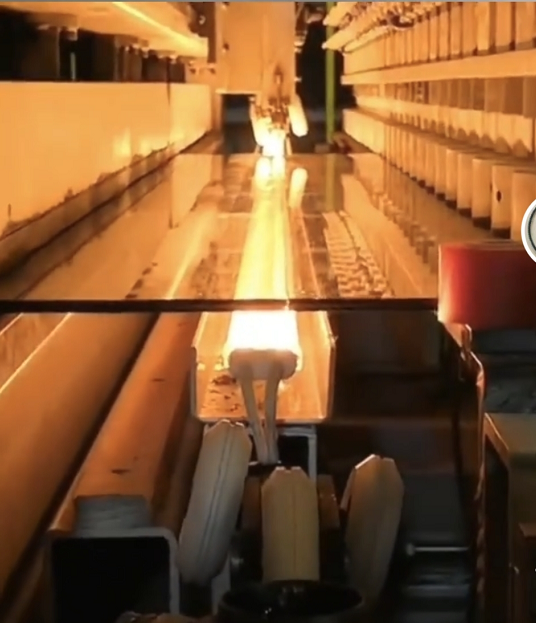
On a continuous annealing line, the furnace heater isn’t just about adding heat—it’s about controlling stress. If the thermal field drifts or the element response lags, you start seeing bow, warp, and edge stress. That stuff doesn’t stay hidden. It shows up later as breakage during cutting, bending, or tempering. Then you’re down for element swaps, and every minute the line sits cold is scrap you can’t claw back. What actually matters under the hood We build the continuous glass annealing heater around medium-wave infrared quartz elements. They respond fast and pack high power density without leaning on heavy convection. That gives you a tight, repeatable thermal profile across the glass width, with less lag between setpoint and what the belt center is actually doing. The heater body is cut for industrial life: compact modular sections, standardized mounting centers, and terminal layouts that match the footprints you already run on glass machines. Electrical design keeps things stable on 380–480V systems, and the thermal mass is low enough to snap back quickly after product changeovers. Why this lands in continuous annealing In continuous annealing, you need stable heat to sit inside the strain-point window and keep glass moving without thermal shock. This heater hits stable soak conditions fast, so the belt doesn’t spend time running cold while the system catches up. The payoff is fewer reject sheets, more consistent flatness, and output you can plan around. Energy use stays in check because the elements deliver heat on demand, and the modular layout lets you isolate a single section for service without shutting the whole furnace. The practical details that make the swap go right Compatibility isn’t a guess. We give you a fit-for-brand replacement path—dimensional drawings, mounting bracket options, and wiring alignment so the unit drops in with minimal rework. Installation is straightforward, but don’t cut corners on the surrounding insulation and sealing. Air leaks and gaps create cold spots that can beat even the best heater. Schedule the swap during a planned line stop, and verify temperature uniformity in the first two passes.