
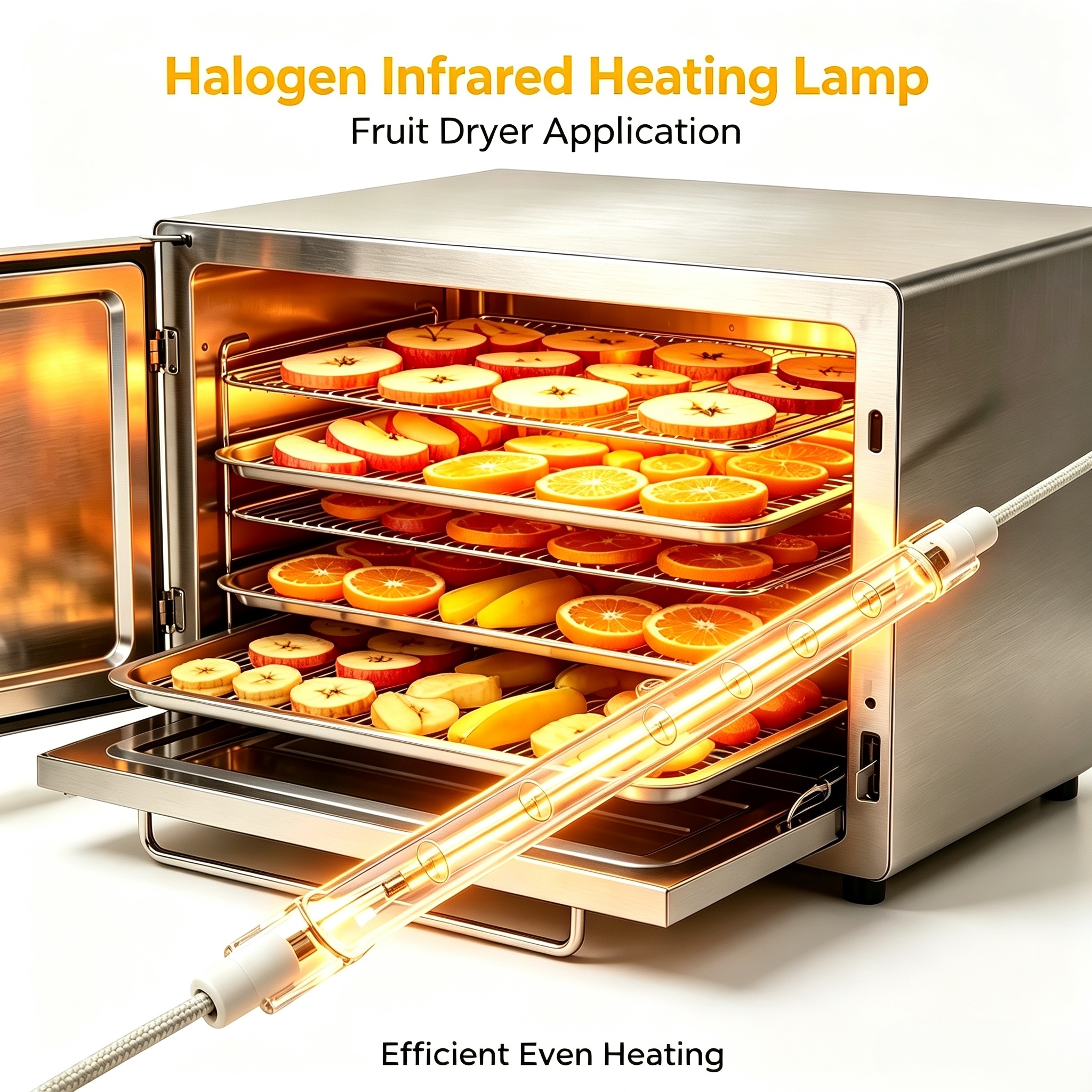
Keeping Your Rotary Oven Running: The Truth About IR Lamps
If you’re running a rotary oven for 10 hours a day, you already know the struggle. You need that perfect, even brown and a core temp that actually hits the mark. But when you’re pushing a machine that hard, the heating elements always seem to be the first thing to give up. That’s why we focus on quartz infrared tubes. They’re built to handle those brutal, continuous cycles without just popping one day. The battle with voltage Most of these ovens use shortwave or medium-wave tubes. The real secret is in the tungsten filament and how pure the quartz is. Here’s the thing: filaments thin out as they age. It just happens. If your voltage isn’t regulated, you’ll get a sudden spike in current, and pop—there goes your tube. We spec ours to keep the wattage steady, even as the lamp gets older, so you aren’t replacing parts every other week. Do “domestic” tubes actually work? I get asked this all the time. Can a high-quality domestic tube actually last as long as those big-name global brands? It all comes down to the glass. We use high-purity fused quartz that doesn’t crystallize when things get scorching. If the quartz is cheap, the tube gets brittle and snaps. Most budget tubes fail because they have impurities in the glass or the seals at the ends are sloppy. We use a vacuum-sealing process that’s just as tight as the premium brands. You’ll get the same hours out of them, as long as your PID controllers aren’t acting too aggressive with the cycling. A few things to watch out for These lamps are designed to be drop-in replacements, so they fit right into your existing setup. Simple. But a word of caution: high-output IR tubes put out an intense amount of localized heat. If you crank up the wattage to speed up your production, you’ve got to make sure your ventilation can actually move that extra heat out of the oven. If you don’t, you’re risking melted external wiring or fried control boards. It’s a headache you don’t want. Also, do yourself a favor and check your contactors every 500 hours. Look for pitting. It’s a quick check that saves you from a massive breakdown right in the middle of a rush.