
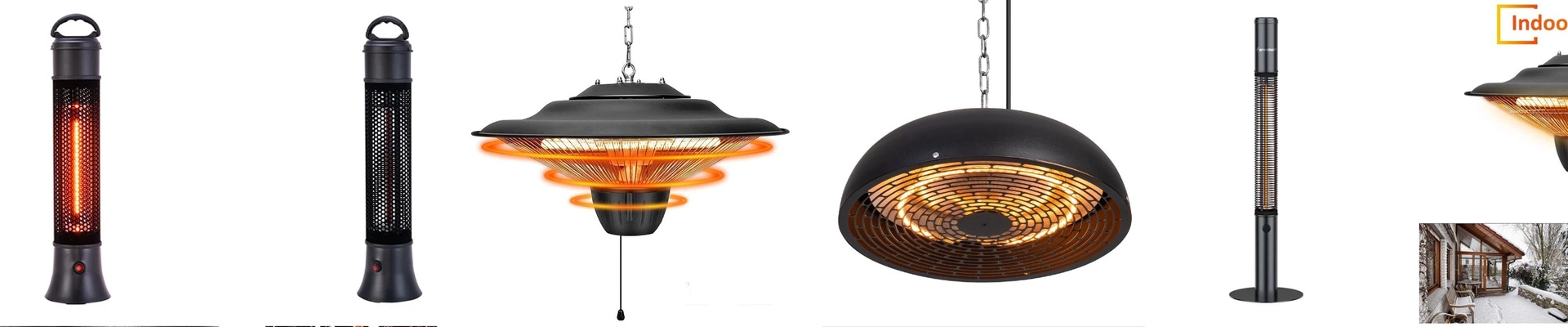
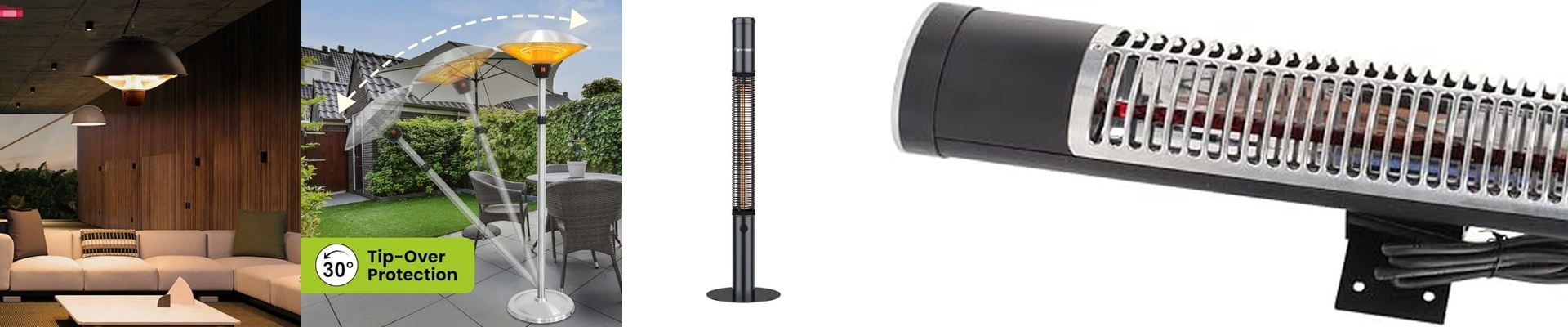

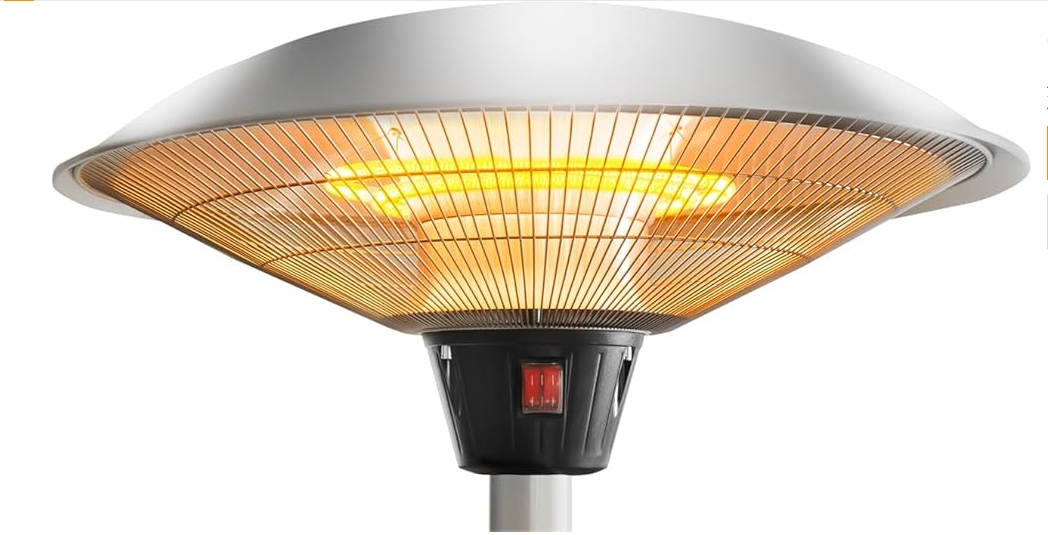
Meet the Tip-Over Protection Infrared Heater
We built this heater for the places where “good enough” just doesn’t cut it—the industrial spots where safety and reliability have to be baked in, not bolted on. Its whole job is simple: give you fast, focused heat right where you need it—and shut off instantly if it gets knocked over. On the shop floor, that speed matters. When you flip it on, how quickly it fires up tells you everything about the quality inside.
Power, Voltage, and Size: Built to Fit
These heaters are matched to real-world industrial power. You’ll typically see them run on 230V or 400V, putting out 1500W to 2500W from a compact 300mm tube. That tight size isn’t by accident. It concentrates the heat where you want it and stops energy from getting wasted all over the work area. Voltage is chosen to line up with standard industrial power, so it drops into your setup without a fight.
The Heart of It: Halogen Element and R7s Connector
Inside that quartz tube sits a high-purity halogen filament. Purity is the secret. A clean, contaminant-free filament heats up almost instantly—full infrared brightness in seconds. If there are impurities, you’ll feel the lag. You can actually see it. And the R7s connector? That’s the workhorse. It handles the high current without arcing, and it makes replacement quick—no tools needed when maintenance day comes.
Where It Shines (and What to Watch For)
This heater is made for spot heating—assembly, curing, drying. The fast start means shorter cycles and steadier control. Safety is mechanical, not software. The tip-over switch is hard-wired, so it still does its job even if the power flickers. But there’s a trade-off: heat density. Running 2500W through a 300mm tube makes for serious localized heat. So your machine’s cooling and ventilation have to be up to the task. When you’re sizing one up, watch the startup. A clean, immediate glow means quality. Anything hesitant? Time to look closer.
How to Spot Quality on the Line
A slow, sluggish light-up usually means impurities in the filament or a worn-down quartz envelope. Those contaminants raise resistance, forcing the element to struggle to reach operating temp. The result? Uneven heat and a shorter life. For us, meeting spec means delivering a pure element that lights fast, runs steady, and holds its output for thousands of hours. For you, that means fewer burnouts and less downtime. And when you wire it in, treat voltage and power ratings as hard boundaries. Pushing beyond the design will shorten the element—no matter how pure it is.
The Shop Floor Reality
This is a simple, tough tool. Its performance comes down to the element inside. Use ignition speed as your first check. Fast, consistent light equals a pure element. Slow or flickering light means you should be looking at a better-spec replacement. We design these to be drop-in replacements. Match the voltage, confirm the length, and make sure the connector fits. The rest is just solid engineering.
Before You Install
Always double-check your supply voltage. A mismatch can fry the element and mess with the tip-over protection. And treat the 300mm length as your anchor for mounting and clearance. If the unit takes more than a couple seconds to hit full brightness, the element isn’t hitting the purity standard. That’s something you can see and time. When you need heat on demand, this delivers. Just make sure your cooling and mounting are ready for the heat it makes.
A Quick Field Test for Engineers
Before you accept a batch, run a cold-start test. Time the light-up. Compare it to the datasheet. If the performance doesn’t match the paper, send the lot back. We stand behind the spec. You should expect nothing less. And remember: the tip-over mechanism is mechanical. That simplicity is the point—no electronics to fail. Keep the tube clean, mount it straight, and match the voltage. Do that, and this heater will take the daily beating without complaining.
Heat Density: The Advantage and the Limit
High wattage in a short tube means intense heat. That’s great when you need to cure a joint fast. It’s also the constraint. If your machine can’t shed that heat, ambient temperature will climb. Plan for airflow and thermal shielding. We design for harsh environments. You have to install for the thermal load.
The Core Truth
The halogen element is the heart. The R7s connector is the backbone. The tip-over switch is your safety net. Watch the light-up. Measure the performance. Match the spec. That’s how you cut through the noise and find real engineering. For industrial heating, the proof is in the heat, the speed, and the safety. We build to that standard. Hold your suppliers to it.